The Workplace Is Now An Operating Decision, Not A Real Estate Cost


A mediocre workplace hides in plain sight, until the bill arrives. Teams that cannot collaborate. Space that will not flex when headcount shifts. Operations quietly eating into leadership's week. A fit-out that dazzled on day one but cannot prove its cost or carbon a year later. For most businesses that is a nuisance. For an enterprise coordinating locations and accountability, it is an operational risk.
Across India, organisations are navigating the same pressures at once: multi-city expansion, hybrid workforces, rising compliance expectations, and boards that now treat real estate as strategy-level capital. This is where an integrated workplace platform changes the outcome because high-performing workplaces are won in how the work is coordinated, not just how it is designed.
Why a High-Performing Workplace Is Different
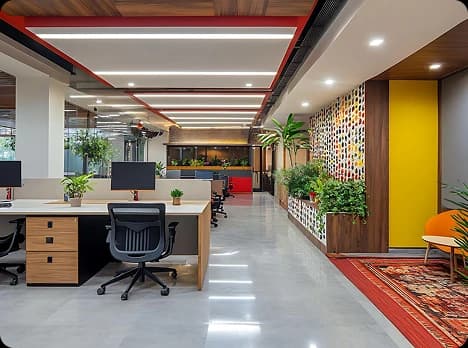
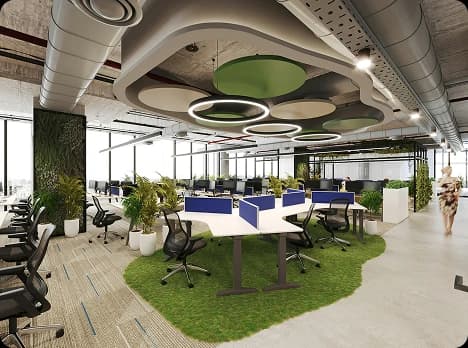
A high-performing workplace rarely fits the assumption that premium finishes equal a great office. A striking reception photographs well, but it tells you nothing about whether the space helps teams move faster, retain people, or adapt as priorities shift. Aesthetics are the easiest thing to judge and the least reliable measure of performance.
What separates a high-performing workplace is measurable. People perform better in it. It adapts as the business changes, headcount shifts, hybrid patterns, new functions, and city growth. It runs reliably day to day. Its cost, compliance, and carbon can all be evidenced rather than estimated.
The difference comes down to intent. A workplace engineered for these outcomes treats them as first-class objectives from the very start. Performance, adaptability, and carbon are defined before a floor plan or finish is chosen.
What's Really Holding Workplaces Back Right Now
Most underperforming workplaces are not the result of dramatic failures. They are caused by small, avoidable decisions compounding across a fragmented delivery chain. One firm advises on strategy, another negotiates the lease, a third handles design and build, and a fourth runs operations. Each is competent alone, but no single party is accountable for the whole.
A lease clause signed without operational input, a layout fixed before headcount is confirmed, a material specified without checking its carbon impact, these are edge cases. They happen constantly in workplaces still delivered through disconnected vendors.
Where Integrated Delivery Fits Into the Bigger Picture
The Indian commercial real estate market is shifting fast. With thousands of global capability centres establishing hubs and expanding across major cities, demand for institutional-grade, accountable workplace partners is rising quickly. At the same time, reporting requirements and operational expectations are moving earlier in the decision process.
How CG Offices builds high-performing workplaces begins with a single platform connecting strategy, delivery, and operations. For enterprises and GCCs across India, that means workplace strategy, leasing, design and build, and managed operations can sit under one accountable team from first conversation to daily operations.
Our Design & Build capability delivers enterprise fit-outs with technical coordination and delivery oversight, while our workplace intelligence platform tracks embodied carbon. Choice, impact, and portfolio performance become visible inside every decision instead of appearing after the work is complete.
Making the Case Internally
If you are building a case for a better workplace model inside your organisation, the strongest argument is usually your own data. Look at fit-out or expansion: how much time slipped between vendors, where cost surfaced late, and whether anyone could evidence the project's carbon impact. Those patterns make the case for an integrated model on their own.
Getting Buy-In Across Stakeholders
That alignment is not easier to reach, it is easier to hold. With one accountable partner, there is a single source of truth every stakeholder can point to: one team answering for cost, one for carbon, one for talent-ready space, and one for the timeline. The internal debates that usually stall workplace projects become fewer and more productive.
The payoff compounds over time. As the business grows, adds cities, or changes how it works, an integrated partner adapts the whole workplace in step. Not four vendors each renegotiating their corner of it. That continuity is what turns a workplace from a project into part of the operating model.
Conclusion
A high-performing workplace is not the one with the best finishes. It is the one where strategy, space, delivery, and operations pull in the same direction and one partner is accountable for all of it. That difference between a workplace that impresses on day one and one that keeps proving its value is the business years later.
For modern enterprises navigating multi-city growth, hybrid work, and rising ESG expectations, the fragmented vendor model simply cannot keep up. The organisations getting it right have stopped stitching four contracts together and started treating their workplace as one connected system planned, built, operated, and measured under a single accountable partner.